"It's terrible, and the need has increased so much parents come with their children and we have to refuse them for lack of space," said Morie S. Ngobeh. He also stated that the drug problem is increasing daily. The center only holds room for 40 patients. Kellie Conteh stated, "This feeds into local consumption; our youths, who are out there in their thousands, unemployed and poor, they get into this, and the more of them who get into this habit, the closer we will get to a catastrophe that will be very difficult to handle."
Most users are poor and will do anything to support their habit. Crime is becoming a huge issue. The youth want money to buy these drugs and they will stop at nothing. Only 3 of the 40 residents at the facility came voluntarily, the others were all brought in by the police or family. The center works with its patients for two weeks and then releases them with something to do, while staying in contact. Joe told IRIN, "We are all skilled workers here ... But there is no work. Youths use marijuana to ease their minds."

The government needs to tackle this problem before it gets to out of control. Its a very serious situation and these people need help! I wonder how all this started. Where did all the drugs come from? How can the people selling the drugs not get caught and put in jail? The whole situation is an eye opener of what reality is in Africa. These people need help before its too late.


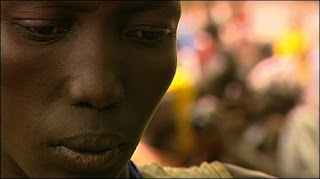 This picture is of a mother struggling to feed her child.
  Serena has helped with the construction of schools in Kenya, Senegal, and South Africa. She has also provided student grants and joined the fight against malaria in Ghana. "It is my goal to open many schools for thousands of children who do not have the opportunity to get good education. I plan to do one every year," said Serena. In November of 2008 on her first trip to Kenya she authorized her first school in the Nairobi area. Almost 3/4 of the local population is under the poverty line. "Without education, life is going to be very difficult. My parents always stressed the importance of getting an education and I hope I am bring to fruition their word by opening this school to the community of Wee," said Serena.
 All face and head ornaments for African rituals and ceremonies are put into one of four categories: the ancestor spirit, the mythological hero, the combination of ancestor and hero, and the animal spirit. African masks most times stand for a spirit and it's believed that the one wearing the mask is possessed by the spirit of the ancestor. Family pride can be shown by masks of human ancestors or animals that a family or clan can trace their ancestry back to. Dance is usually included when masks of Africa are used. Some examples of dance rituals that include African masks are: agricultural festivals, rituals for increase (money, property, children), rituals for rites of passage, ancestor cults, and fertility rites.